From Scribbles to Synthesis: How Strategic Annotation Turns Raw Research into Compelling Arguments
There is a particular kind of frustration that nearly every college student recognizes: you have spent hours reading journal articles, book chapters, and credible online sources, your browser tabs are multiplying, and yet when you sit down to write, the page remains stubbornly blank. The research feels like a pile of lumber rather than a house. What is missing, more often than not, is not more sources—it is a system for transforming what you have read into something that is genuinely yours.
That system is annotation, and most students are doing far too little of it.
What Annotation Actually Means (and What It Does Not)
Annotation is frequently misunderstood as simple highlighting. Students drag a yellow marker across sentences that seem important, close the PDF, and consider the job done. But highlighting alone is a passive act. It records what caught your eye without asking why it caught your eye, how it connects to other material, or what you actually think about it.
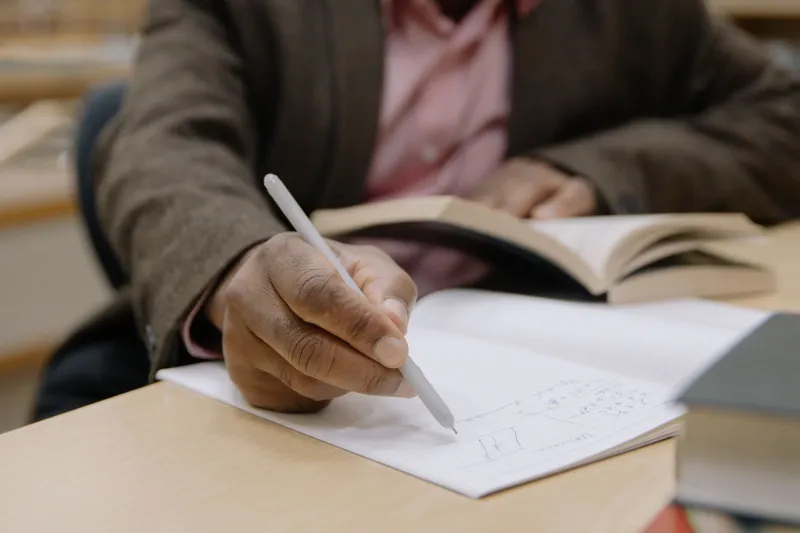
True annotation is a conversation between you and your source. It involves writing in the margins—or in digital comment boxes—to capture your immediate intellectual reactions: questions you want to answer, connections to other readings, points of agreement or skepticism, and potential uses for the material in your own argument. Think of it as leaving breadcrumbs for your future writing self, who will need to retrace your thinking without having to reread every page.
This distinction matters enormously for essay quality. When your annotations are substantive, your essay drafting becomes an act of assembly rather than an act of invention from scratch. The intellectual heavy lifting has already happened.
The Four Types of Margin Notes That Actually Move the Needle
Not every annotation is equally useful. Experienced academic writers tend to rely on four distinct types of margin notes, each serving a different purpose in the writing process.
Summary annotations condense a passage into your own language. Even a single sentence—"Author argues that standardized testing disadvantages first-generation students by rewarding test prep resources, not aptitude"—forces you to process the idea rather than merely receive it. This paraphrase is also your first draft of an in-text citation.
Question annotations flag gaps, contradictions, or curiosities. Writing "But does this hold in rural school districts?" next to a claim about urban education policy is not a sign of confusion—it is the seed of your own analytical contribution. Essay graders reward students who identify the limits of their sources, and question annotations are how you train yourself to do exactly that.
Connection annotations link the current source to something else you have read. A note like "Compare to Johnson (2021) on socioeconomic sorting" creates the architecture of your literature review before you have written a single paragraph. When you later draft that section, you are not searching your memory—you are following a map you already drew.
Reaction annotations record your genuine intellectual response: agreement, skepticism, surprise, or recognition of a well-constructed argument. These are particularly valuable because they reveal where your own voice wants to enter the conversation. An essay that synthesizes sources without ever expressing a position is an essay without a thesis. Your reaction notes are where your thesis lives, waiting to be articulated.
Building the Bridge from Source to Draft
Once your sources are annotated, the drafting process changes character entirely. Instead of returning to a source and reading it again in full, you scan your own notes. The ideas have already been filtered through your thinking once, which means they arrive at the page pre-digested and ready to be shaped into argument.
A practical method many strong writers use is the "annotation dump" before drafting. After completing all research and annotation, they spend twenty or thirty minutes writing freely—not an essay, but a running account of what they found, what surprised them, and what they want to argue. Because this informal writing draws on their margin notes rather than the raw sources, it tends to be more confident and more original than a first draft written cold. The essay that follows is a polished version of thinking that has already happened.
This approach also solves one of the most common citation problems in undergraduate writing: the dropped quotation. This occurs when a writer pastes a block of source material into an essay without adequate setup or follow-up, leaving the reader to infer its relevance. When you have annotation notes explaining why a passage matters to your argument, you naturally write the interpretive sentences that surround it. The citation becomes integrated rather than ornamental.
Digital Tools and the Analog Case
For students working primarily with PDFs and online sources, annotation tools like Adobe Acrobat Reader, Hypothesis, or even the comment function in Google Docs can replicate the margin-note experience effectively. Many students also find that exporting their annotations into a single document—essentially a personalized research digest—gives them a working outline before they have consciously tried to create one.
That said, there is a reasonable case for analog annotation when circumstances allow. Handwriting activates different cognitive processes than typing, and research on note-taking consistently suggests that students who write by hand encode information more deeply than those who type. If you are working with a physical text or a printed article, a pencil and a set of colored pens can be more valuable than any app.
The medium matters less than the habit. What counts is that you are recording your thinking as you read, not after.
Why This Matters for Academic Integrity
There is an integrity dimension to annotation that is worth naming directly. Students who annotate their sources as they read are far less likely to inadvertently plagiarize. When you have already paraphrased a passage in your own words in the margin, that paraphrase—not the original phrasing—is what flows into your draft. The risk of lifting language unconsciously is substantially reduced because you have placed your own language between yourself and the source.
Annotation also makes the research process more transparent and traceable. If a professor ever questions the origin of an idea or the use of a source, a student with thorough annotation notes can demonstrate exactly how they engaged with the material and how their argument developed. That kind of intellectual accountability is not just strategically useful—it reflects genuine scholarly practice.
The Larger Payoff
At its best, annotation is not a writing technique. It is a thinking technique that happens to make writing easier. Students who annotate consistently tend to develop stronger thesis statements because they have been articulating positions throughout their reading, not just at the end of it. They write more confident body paragraphs because they have already identified the connections between sources. And they produce conclusions that feel genuinely earned because the argument has been built piece by piece, note by note, rather than assembled in a last-minute rush.
The margin is where your essay begins. Use it.