Marked Up and Stuck: How Over-Annotating Your Sources Is Quietly Derailing Your Research
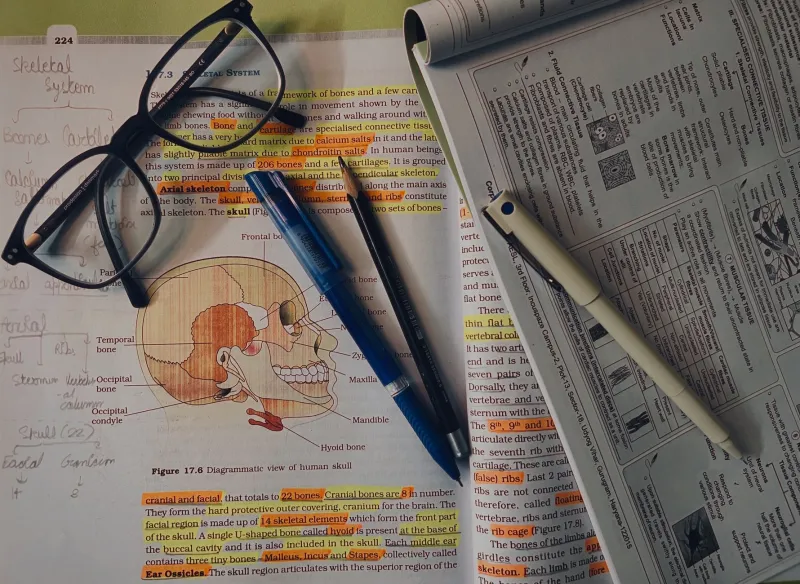
Open any used college textbook at a campus bookstore and you will likely find the same pattern: entire pages drenched in yellow highlighter, margin notes crowding every paragraph, asterisks and arrows competing for attention across every section. The student who owned that book almost certainly believed they were being diligent. In practice, they were making their own research harder to use.
Over-annotation is one of the most widespread and least discussed obstacles in academic writing. It is not a sign of laziness—it is, paradoxically, a symptom of working too hard in the wrong direction. Understanding why students fall into this pattern, and how to escape it, can fundamentally change the quality of the essays they produce.
The Psychology Behind the Highlighter
Annotation anxiety has a straightforward origin: uncertainty. When a student sits down with a source they do not yet fully understand, nearly every sentence can seem potentially relevant. The instinct is to capture everything now and sort it out later. Highlighting feels productive. It creates visible evidence of effort. It also, crucially, delays the harder cognitive task of actually evaluating what matters.
Researchers who study reading comprehension have long noted that passive marking—highlighting without active judgment—does little to improve retention or understanding. What it does do is create an illusion of progress. A densely annotated PDF or a book filled with margin notes looks like serious scholarship. But if every third sentence is marked as important, then nothing is important. The filtering work that annotation is supposed to accomplish has simply been postponed, not done.
By the time a student returns to those sources to write their essay, they face a secondary research problem: sorting through their own markings to find what actually matters. The annotation that was supposed to save time has created a second layer of clutter.
What You Are Actually Trying to Do When You Annotate
Before establishing a better system, it helps to clarify the purpose of annotation in the first place. Marking up a source is not documentation—it is not proof that you read something. It is a decision-making tool. Every mark you make should answer one of a small number of questions:
- Does this sentence directly support, challenge, or complicate the argument I am building?
- Is this a definition, statistic, or piece of evidence I will likely need to cite?
- Does this passage reveal something about the author's methodology or bias that affects how I should use their work?
- Is this a direct quotation that is genuinely irreplaceable—meaning the specific language, not just the idea, is what matters?
If a passage does not answer at least one of those questions clearly, it does not need a mark. This sounds simple. Applying it in practice requires resisting the urge to annotate defensively—that is, marking things because you are afraid you might need them later.
A Practical Filtering System for Selective Annotation
The most effective annotation systems share one quality: they require the reader to make a judgment before marking, not after. Here is a three-stage approach that works well for academic research at the undergraduate and graduate level.
Stage One: Read the full section or article before marking anything. This is uncomfortable for students who are used to annotating in real time, but it is essential. Reading without a pen in hand forces your brain to process meaning rather than pattern-match for sentences that sound important. After finishing a section, pause and ask: what did this actually tell me? Only then return to mark the specific passages that support your answer.
Stage Two: Use a code system rather than uniform highlighting. Color coding—or, for digital annotations, distinct tags—forces you to categorize what you are marking rather than simply flagging it. A simple system might distinguish between direct evidence, background context, and methodological notes. When you return to your sources during drafting, you can immediately identify which annotations are doing real argumentative work and which are simply informational.
Stage Three: Write a one-sentence summary of each source in your own words before you close it. This step takes roughly ninety seconds and pays significant dividends. If you cannot summarize what the source contributed to your argument in a single sentence, one of two things is true: either the source is not as useful as you thought, or you have not yet understood it well enough to use it. Either way, that is information you need before you start writing.
How Selective Annotation Strengthens the Final Essay
The connection between annotation discipline and essay quality is direct. When you annotate selectively, the passages you do mark carry genuine weight. When you return to your sources during drafting, you are not sifting through a hundred highlighted sentences—you are working with a curated set of material that has already passed a relevance test. The synthesis work, which is where the real intellectual effort of essay writing lives, becomes dramatically easier.
There is also a structural benefit. Students who over-annotate tend to write essays that mirror the sprawl of their research: arguments that chase tangents, paragraphs that include interesting material simply because it was marked, and conclusions that struggle to land because too many threads were introduced. Selective annotation, by contrast, creates a natural editorial discipline from the very beginning of the research process. You are not waiting until the revision stage to cut what does not belong—you are making that judgment at the source level, where it costs far less time.
Rethinking What Thoroughness Looks Like
There is a cultural assumption embedded in American academic life that more effort always produces better results. More hours in the library, more sources consulted, more pages annotated. This assumption is understandable, but it is not always accurate. Thoroughness in research is not measured by volume—it is measured by the quality of the judgments you make about what matters and why.
A student who reads fifteen sources carefully, annotates each one selectively, and enters the drafting process with a clear sense of which evidence serves their argument is in a stronger position than a student who has read the same sources but marked everything indiscriminately. The first student has done the intellectual work of research. The second has documented that they read without yet doing that work.
Annotation is a tool, not a record. Used well, it sharpens your thinking before you write a single sentence of your essay. Used carelessly, it creates a paper trail that substitutes for thinking rather than supporting it. The difference between those two outcomes often comes down to one habit: deciding what matters before you reach for the highlighter.